Color Black Spiritual Meaning: Symbolism, Psychology, and Deep Spiritual Insights
Color black is a deep and powerful color. It represents darkness, mystery, and silence in life. In spirituality, it stands for protection, strength, and transformation within a person. It is not just empty space but a place where growth begins and hidden energy exists.
Many people feel confused when they think about black. Some believe it always means something bad or negative. Others feel calm, strong, and safe when they see or wear it. This mix of feelings makes black a very interesting and powerful color to understand.
The Color Black Spiritual Meaning explains how black connects to inner strength and deep thinking. It helps people reflect, grow, and protect their energy in daily life. It also shows that every dark phase can lead to a new beginning and better understanding.
What Does the Color Black Symbolize?
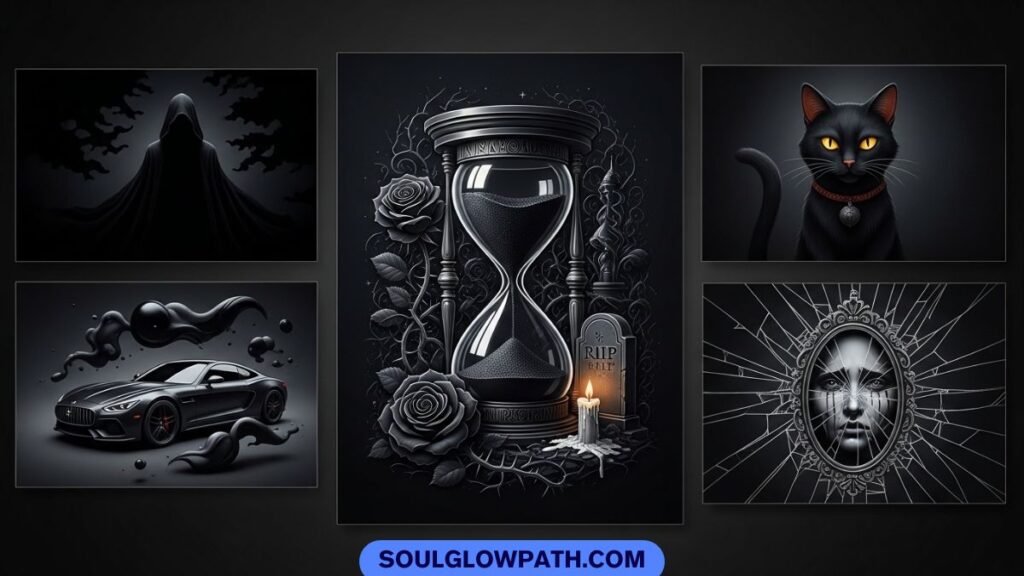
Black is one of the few colors that contains multitudes without contradiction. It simultaneously represents power and humility, protection and mystery, endings and new beginnings. In a world of surface-level impressions, black refuses to be simple.
Spiritually, black represents the sacred unknown — the vast space from which all creation emerges and to which everything returns. Ancient civilizations understood this intuitively. In Egypt, the dark fertile soil left by the Nile’s floods was the very symbol of life and regeneration, not death. The darkness was not feared; it was honored as the womb of existence.
In modern symbolism, black is associated with authority, sophistication, and control. This is why it dominates formal attire, luxury branding, and positions of power. But beneath these surface associations lies something far deeper: black as a mirror of the inner world, a color that draws us inward rather than outward, and teaches us to find strength in stillness.
Symbolically, black reminds us that transformation always begins in the dark. Seeds germinate in the hidden depths of soil. Stars are born from the vast blackness of space. Human souls undergo their most profound growth not in comfort, but in the quiet, unseen places where no one is watching.
Psychology of the Color Black
In color psychology, black communicates authority, discipline, independence, and depth. People who are drawn to black are often perceived as serious, self-contained, and emotionally intelligent. They tend to value substance over performance and prefer meaning over noise.
Psychologically, black creates boundaries — both visible and invisible. Wearing black signals a kind of inner sovereignty: a quiet declaration that one knows who they are and does not require external validation. It is the color of people who speak less but mean more.
Black also represents the unconscious mind. It draws attention inward, inviting introspection and self-examination. In therapeutic and spiritual contexts, black often surfaces when a person is confronting their shadow self — the hidden parts of the psyche containing suppressed fears, unresolved emotions, and unexpressed desires. This confrontation, though uncomfortable, is essential for genuine growth.
On the other end of the spectrum, an overreliance on black can sometimes indicate a desire to conceal vulnerability or maintain emotional distance. The same protective quality that makes black empowering can, in excess, become isolating. Like all things, its true power lies in conscious, balanced use.
Ultimately, black in psychology teaches us that darkness is not something to escape from — it is something to move through. And in that movement, we discover the resilience, clarity, and depth that define real strength.
13 Spiritual Meanings of the Color Black
1. Mystery and Transformation
Black is the color of sacred mystery — the unseen realms that exist beyond the reach of ordinary perception. It represents the vast spiritual unknown from which all creation emerges and the hidden truths that reveal themselves only to those who are willing to look inward with patience and honesty.
More than any other color, black marks the territory of transformation. Every profound change in human life begins somewhere dark and unnamed — the grief before acceptance, the silence before clarity, the ending before rebirth. Spiritually, black is the container for this process. It holds the space where old identities dissolve and new ones are not yet formed. It is the chrysalis in which metamorphosis occurs.
For those walking through life’s dark seasons, black offers a spiritual reassurance: you are not lost. You are transforming.
2. The Unconscious and Inner Depth
Black symbolizes the unconscious mind with remarkable precision. Just as the depths of the ocean remain unseen from the surface, black points to the hidden layers of the psyche — the vast interior world that shapes our thoughts, feelings, and behavior beneath the level of conscious awareness.
In the language of the soul, black is silence. It is the pause between heartbeats, the stillness between thoughts — the space where intuition speaks and divine wisdom can be heard. Many contemplative traditions recognize that true spiritual insight does not come through noise, but through a willingness to sit with the dark and the unknown.
Embracing black on a spiritual level means accepting the full depth of who you are — including the parts you have not yet understood, and the emotions you have not yet faced.
3. Protection and Grounding
Across many spiritual traditions, black is revered as one of the most powerful colors of protection. It is believed to absorb negative energy, shield the aura from psychic intrusion, and create a space of stillness and safety during times of emotional turbulence or external chaos.
Empaths and energetically sensitive individuals have long favored black in clothing, crystals like black tourmaline and obsidian, and meditative practice — not out of darkness, but out of wisdom. Black grounds energy, anchors it to the physical earth, and prevents the kind of energetic overwhelm that comes from being too open to external influences.
Spiritually, black’s protective quality is not passive — it transforms lower vibrations into wisdom and strength, teaching us that resilience is not the absence of impact, but the capacity to absorb and transmute it.
4. Authority and Inner Sovereignty
There is a reason black is the color of robes worn by judges, priests, monks, and those entrusted with moral and spiritual authority. It communicates seriousness, discipline, and the earned confidence that comes from a life of genuine self-examination.
Spiritually, this authority is not about dominance — it is about inner sovereignty. The quiet confidence of someone who has faced their own darkness and emerged with clarity. The elegance of black lies precisely in its restraint: it does not demand attention, it commands respect. It is the color of those who have stopped seeking validation from the world and found it within themselves.
5. Spiritual Power and the Occult
In esoteric and occult traditions spanning centuries, black has been regarded as one of the most potent spiritual frequencies. Mystics, shamans, and spiritual adepts have used black in ceremony and ritual to invoke protection, work with unseen forces, and access the deeper mysteries of consciousness.
Black is the color of initiation — of those who have walked through spiritual darkness and returned with wisdom. It is not a color of evil, as popular misconception would have it. Rather, it represents neutrality and totality: the capacity to hold all energies — light and shadow alike — and transmute them through intention and awareness.
In this tradition, black teaches that spiritual mastery is not achieved by avoiding darkness, but by learning to navigate it with wisdom and grace.
6. The Cycle of Life, Death, and Rebirth
Perhaps no spiritual meaning of black is more universal than its association with the great cycles of existence — the eternal movement between birth, death, and regeneration. Ancient traditions across cultures placed black at the center of this cosmic truth.
In Hindu mythology, the goddess Kali is depicted in black or dark blue, embodying not evil, but liberation through destruction. Her darkness dissolves ego and ignorance, making space for genuine spiritual renewal. In ancient Egypt, black symbolized the fertile Nile soil — the source of life itself, not its absence. These are not contradictions; they are different faces of the same deep truth.
Black teaches us to trust the natural rhythm of existence — that within every ending is the seed of a new beginning, and that the darkness before dawn is not a sign of abandonment, but of preparation.
7. Mourning and the Wisdom of Grief
Black as a symbol of mourning is one of its most ancient and universal meanings. Across nearly every culture, it has been the color worn in grief — not because death is ugly, but because loss deserves to be honored with the depth and seriousness that black carries.
Spiritually, however, mourning in black is never merely about sorrow. It is about the sacred work of grief — the slow, necessary process of accepting impermanence and finding meaning within suffering. Black creates a boundary around the mourner, a visible signal to the world: something has ended here, and that ending is being respected.
In this way, black transforms sorrow into strength, and grief into one of the most honest expressions of love.
8. Darkness and the Creative Void
In Buddhist philosophy and other contemplative traditions, the void — the infinite darkness that precedes all form — is not nothingness. It is the ultimate reality. It is the formless state from which all creation emerges and to which everything eventually returns. Black symbolizes this sacred void with perfect fidelity.
To contemplate black is to contemplate the universe itself — vast, silent, boundless, and full of unrealized potential. The darkness is not empty; it is pregnant with possibility. Artists know this intuitively. Musicians speak of the silence between notes. Writers understand the blank page. The void is not an obstacle to creation — it is creation’s most essential ingredient.
Read Also: Brown Butterfly Spiritual Meaning: What These Gentle Messengers Reveal to You
9. Deep Esoteric Wisdom
In esoteric tradition, black represents the gateway to knowledge that cannot be taught — wisdom that must be earned through experience, silence, and genuine inner transformation. Because black absorbs all wavelengths of light, it symbolizes totality and wholeness: the hidden source from which all understanding springs.
Many mystical traditions prescribed practices of darkness and solitude precisely because they understood what modern neuroscience is beginning to confirm: when external stimuli are removed, internal awareness expands. The inner vision awakens. Intuition sharpens. And spiritual insight emerges not from accumulating more information, but from learning to be still with what you already know.
10. The Shadow Self
Carl Jung famously described the shadow as the part of the psyche containing everything we have repressed, denied, or refused to acknowledge about ourselves. And if the shadow had a color, it would be black — not because it is evil, but because it lives in the dark, unseen places of the inner world.
Spiritually, confronting the shadow is not optional — it is the price of genuine growth. Every unexamined fear, every unexpressed emotion, every suppressed desire continues to exert influence from the shadow. Black invites us to look there honestly, with compassion rather than judgment. In doing so, we integrate what was divided, and become more fully ourselves.
11. Wealth, Restraint, and Inner Abundance
Black has long been associated with wealth — not the loud, performative wealth that demands attention, but the quiet, assured prosperity that needs none. Historically, black garments were expensive to produce and therefore worn by those of high status. Over time, this evolved into a deeper symbolic truth: true wealth is found in restraint, not excess.
Spiritually, black represents the richness of inner peace — the abundance that comes from self-mastery, discipline, and the ability to sit quietly with one’s own thoughts. It teaches that what is most valuable is often invisible, and that the most powerful presence in a room is frequently the quietest one.
12. Humility and the Spiritual Path
In many religious traditions — from Christian monasticism to Zen Buddhism to Sufi practice — black is the color chosen by those who have dedicated their lives to spiritual pursuit. Not because it signifies superiority, but because it represents the dissolution of ego, the willingness to be a vessel rather than a spectacle.
This humility is not weakness. It is the deepest form of strength — the kind that does not need to announce itself. Wearing black in this context is a quiet declaration: I am not here to be seen. I am here to see.
13. Personal Power and Self-Mastery
At its most personal and immediate, black is the color of self-mastery — the quiet confidence that comes from knowing who you are, what you value, and how you want to move through the world. It is the color of emotional intelligence, of people who have done the inner work and no longer need external approval to feel secure.
Spiritually, this personal power is not about control over others, but over oneself — the ability to respond rather than react, to choose deliberately rather than be swept along by impulse or circumstance. Black, in this sense, is the color of freedom.
Spiritual Meaning of Black and White
The interplay between black and white is one of the most ancient and enduring symbols in human history. Together, they represent the fundamental duality at the heart of existence: light and darkness, the known and unknown, the conscious and unconscious, the finite and the infinite.
In Taoist philosophy, this duality is expressed through the Yin and Yang. Black (Yin) embodies the feminine, receptive, intuitive energy — the deep, still waters of inner knowing. White (Yang) represents the masculine, active, expressive force — clarity, direction, and outward movement. Neither is superior. Neither is complete without the other. Together, they form the dynamic balance that sustains the universe.
Spiritually, black and white together remind us that the journey toward light always passes through darkness. Wisdom cannot be separated from the experience of not knowing. Faith cannot exist without the experience of doubt. And the most luminous human beings are those who have honestly faced their own shadow and integrated it.
When black and white appear together in symbolism, art, or spiritual practice, they signify integration — the wholeness that comes not from choosing one side over the other, but from honoring both.
Cultural and Religious Significance
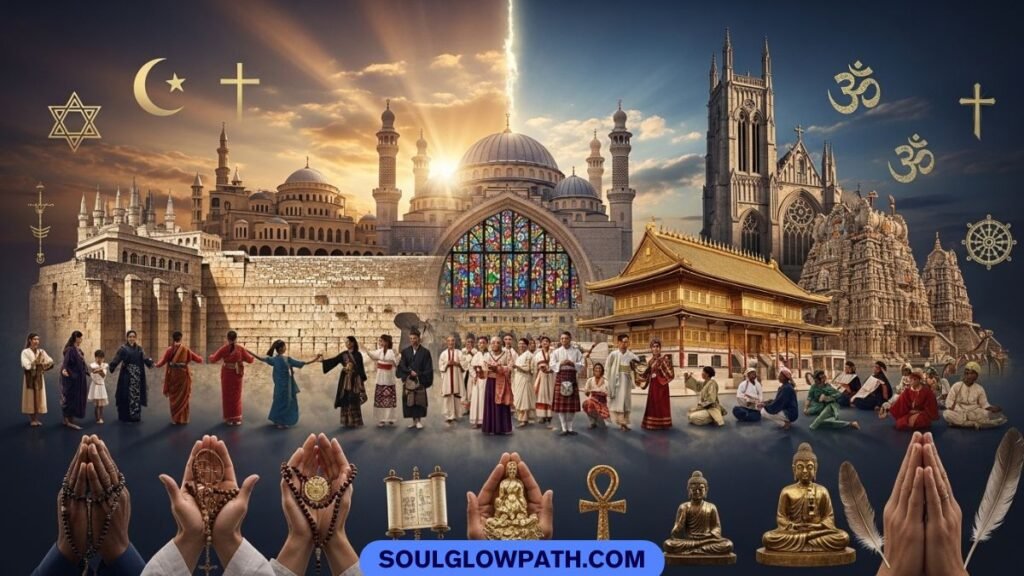
Across every major civilization, black has carried deep meaning — though the specific associations have varied considerably depending on context and belief.
| Culture / Religion | Primary Meaning | Symbolic Element | Context |
| Western (USA/Europe) | Mourning, Formality | Death, Authority | Funerals, Formal Wear |
| African Traditions | Ancestral Strength | Fertility, Earth | Rituals, Spirituality |
| Chinese Culture | Water, Depth | North, Endurance | Philosophy, Balance |
| Japanese Tradition | Honor, Discipline | Mystery, Nobility | Samurai, Monks |
| Hindu Beliefs | Transformation | Goddess Kali | Death & Rebirth Cycle |
| Ancient Egypt | Fertility, Rebirth | Nile Silt | Burial, Afterlife |
| Christian Symbolism | Sin, Humility | Repentance | Mourning, Redemption |
What is striking across these traditions is not their differences, but their shared recognition that black carries weight. Whether that weight is understood as protection, transformation, mourning, or mystery, every culture has placed black at the intersection of the human and the sacred.
What Does It Mean to Dream About the Color Black?
Dreams involving black rarely carry simple meanings. Context is everything. The same color that appears in a dream about loss may also appear in one about liberation. Black in dreams is fundamentally a language of the subconscious — and like all languages, it must be understood in context.
If you dream of black spaces, clothing, or environments, you may be entering a period of deep introspection or confronting something within yourself that has long remained unexamined. These are not necessarily ominous dreams — they are often invitations.
Black animals appearing in dreams — panthers, ravens, crows, black cats — frequently symbolize heightened intuition, spiritual protection, and messages from the deeper self. In many shamanic traditions, encountering a black animal in a dream is considered a sign of significant spiritual guidance.
Psychologically, dreaming of black often reflects an encounter with the shadow self — those hidden aspects of the psyche that carry unresolved emotion. Rather than fearing these dreams, spiritual traditions encourage engagement with them. Facing what is dark within us leads, ultimately, to greater light.
At its most expansive, black in dreams represents the same void that contains all potential — a reminder that before any new chapter in life can begin, the previous one must fully close.
Biblical Meanings of the Color Black
In scripture, black most often appears in contexts of suffering, spiritual testing, mourning, and divine judgment. The books of Lamentations and Revelation use darkness and black imagery to describe periods of immense human anguish — but also, crucially, to frame those periods as temporary passages rather than final destinations.
There is a recurring pattern in biblical narrative: darkness precedes revelation. Moses encounters God in the darkness of the mountain. The sky darkens at the moment of Christ’s crucifixion before the resurrection that follows. The disciples pass through fear and confusion before Pentecost transforms them. In each case, the darkness is not the absence of God — it is the presence of God working in ways not yet visible.
Black in Christian symbolism also represents humility and the recognition of human imperfection — the honest acknowledgment that we fall short, and the willingness to seek renewal. In this light, black becomes not a color of condemnation, but of grace: the sacred space where repentance and transformation become possible.
Ultimately, the biblical relationship with black is one of honest reckoning and hopeful transformation — a reminder that the deepest faith is not the kind that avoids darkness, but the kind that trusts the light that waits on the other side.
Read Also: Bird Poop on Car Meaning: Spiritual Signs, Cultural Beliefs, and Is It Good Luck?
The Black Aura: Meaning and Interpretation
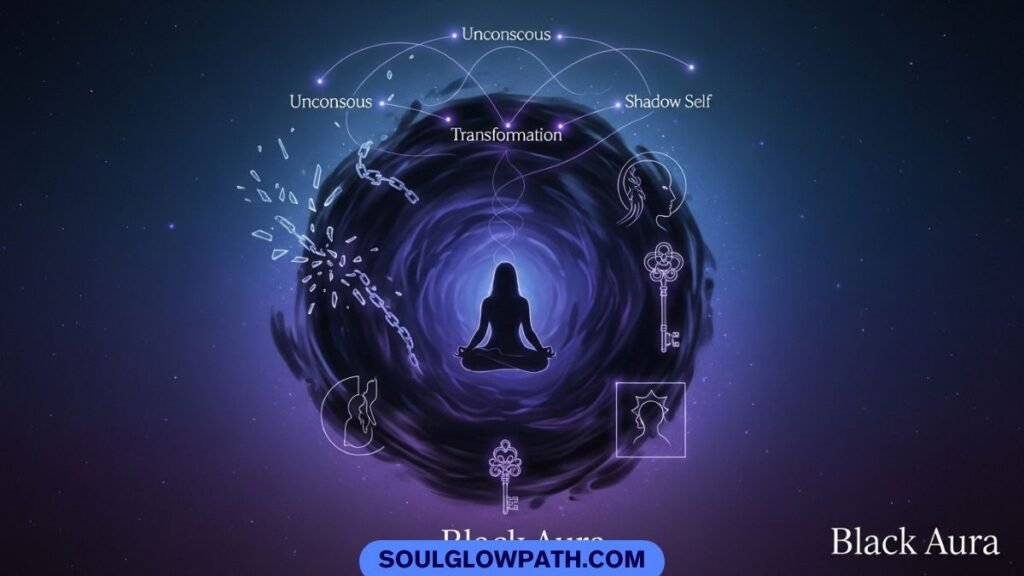
A black aura is one of the most complex and least understood phenomena in energy healing and spiritual practice. Its appearance does not indicate evil or malevolence — it is a signal that deserves careful and compassionate attention.
Most commonly, a black aura indicates that a person is carrying a significant energetic burden — unresolved grief, trauma, prolonged stress, or unexpressed emotion that has accumulated over time. It may also indicate that the individual is engaged in intense shadow work, actively processing and transmuting difficult inner material.
In some cases, a black aura reflects a protective mechanism — the psyche drawing inward, creating energetic boundaries in response to overwhelming external circumstances. Rather than a permanent condition, it is often a transitional state: the darkness before a significant breakthrough.
If you notice a black aura — in yourself or others — the spiritual response is not alarm, but compassion. What is present is not something to be feared, but something that needs to be witnessed, honored, and gently released.
The Color Black in Everyday Life
You do not need to be meditating or reading sacred texts to encounter the spiritual dimensions of black. This color is woven quietly into the fabric of daily life, communicating its meanings through every choice of clothing, decor, and self-expression.
People often reach for black during periods of transition — when undergoing significant personal change, when feeling the need for greater emotional protection, or when seeking greater clarity and focus. It is the color chosen by those who want to be taken seriously, who value depth over display, and who find more truth in silence than in noise.
Noticing that you are drawn to black more frequently during a particular period of life is worth paying attention to. It may reflect an unconscious movement toward introspection, a need for grounding, or the beginning of a significant inner transformation. The color is not incidental — it is communicating something real.
How to Work With Black Energy
Black energy — understood consciously and used intentionally — can be one of the most stabilizing and transformative forces available to a spiritual practitioner.
In Daily Life: Wearing black during periods of stress or emotional intensity can provide a genuine sense of calm and containment. It signals to both the inner self and the external world that you are holding your energy close, protecting what is precious, and moving with deliberate intention rather than reactive impulse.
In Meditation: Visualizing darkness or meditating in a dimly lit space can help quiet the analytical mind and deepen access to intuition. Many practitioners find that black helps them release mental chatter and enter states of stillness that lighter environments resist. The darkness becomes a kind of permission — to stop performing, stop explaining, and simply be.
In Shadow Work: Black is the ideal color for shadow work — the practice of consciously engaging with and integrating the hidden aspects of the self. Working with black crystals such as black tourmaline, obsidian, or jet can support this process, creating a space of protection while you explore difficult inner terrain.
Frequently Asked Questions
What does the color black mean spiritually?
The Color Black Spiritual Meaning shows protection, mystery, and transformation.
It represents inner strength, deep thinking, and spiritual growth.
What does the black symbolize?
Black symbolizes power, authority, and the unknown.
It also stands for endings, rebirth, and hidden truths.
Why is black such a powerful color?
Black is powerful because it absorbs energy and creates protection.
It gives a sense of control, confidence, and emotional strength.
What does black mean prophetically?
Prophetically, black represents testing, change, and spiritual growth.
It signals a transition that leads to a new beginning.
Final Thoughts
Black is not simply a color. It is a language — one that human beings have been fluent in since the first ancestor looked up at the night sky and understood, in their bones, that the darkness was not empty.
The spiritual meaning of black encompasses protection and transformation, inner power and humble wisdom, the courage to face what is hidden, and the faith that every period of darkness is ultimately in service of greater light. It is the color of those who have chosen depth over surface, meaning over performance, and authentic growth over comfortable illusion.
To understand black is to understand something essential about the nature of existence itself: that creation requires darkness, that transformation requires dissolution, and that the most luminous moments in a human life are often born from the willingness to sit quietly, honestly, in the dark.
Related Guides:
1: Spiritual Meaning of Ear Pain: What Your Body Is Trying to Tell You Metaphysically
2: Spiritual Meaning of Tears: Right Eye and Left Eye Messages Explained
3: Mole on Neck Meaning for Females & Males: Astrological, Spiritual, and Cultural Insights
4: Mole on the Forehead: Astrological, Spiritual, and Cultural Insights
5: Right Eye Twitching Spiritual Meaning: What Your Right Eye Flutter Really Means